
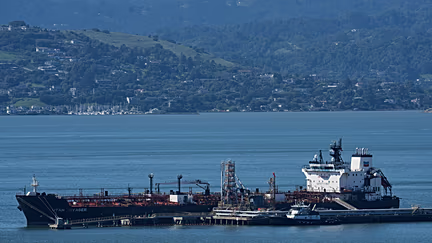
Oil tanker passing through the Strait of Hormuz amid rising global energy prices and geopolitical tensions.
Rising global oil prices triggered by escalating tensions in the Middle East are unlikely to deliver lasting economic gains for Nigeria, according to fresh warnings from the International Monetary Fund and the United Nations.
The caution follows disruptions linked to the ongoing Iran conflict, including the closure of the Strait of Hormuz—a critical global oil transit corridor—driving up freight and energy costs.
Pamela Coke-Hamilton, Executive Director of the International Trade Centre, said oil-exporting countries like Nigeria could see short-term revenue gains from higher crude prices, but warned that the broader economic impact would likely be muted.
She noted that Nigeria remains heavily dependent on imported refined petroleum products, meaning higher earnings from crude exports could be offset by rising import bills.
Global oil markets have been highly volatile, with prices briefly climbing above $100 per barrel after the collapse of U.S.-Iran talks, before retreating—underscoring the fragile nature of the rally.
The IMF has already revised Nigeria’s economic outlook downward, cutting its 2026 growth forecast to 4.1 percent.
READ ALSO
- World Bank Targets $5.79bn in Private Investment for Nigeria
- 2027 Budget: Kaduna Prioritises Agriculture, Health, Education
- Appeal Court upholds Orya’s 10-year concurrent jail terms
According to the Fund’s Chief Economist, Pierre-Olivier Gourinchas, the downgrade reflects mounting pressures across Sub-Saharan Africa, including rising inflation and slowing growth.
Higher energy prices, alongside increased shipping and logistics costs, are expected to weigh on economic activity, particularly in non-oil sectors.
The IMF further warned that war-driven increases in fuel and fertiliser costs could reduce productivity and squeeze household incomes, even as governments benefit from improved oil revenues.
Nigeria’s 2026 budget benchmark of $64.85 per barrel highlights the uncertainty surrounding sustained gains, as market instability continues to shape global energy prices.
Analysts say with supply chains under strain and geopolitical risks persisting, any windfall from rising oil prices is likely to be short-lived—offering limited long-term support for economic stability.
About The Author


